Your booking cart is empty!

Discovering
Sabah’s Five Indigenous Tribes
One
of the most remarkable features of Mari Mari Cultural Village is that it brings
together the traditional homes and customs of five major indigenous tribes
of Sabah in a single location. These communities are the Kadazan-Dusun,
Rungus, Lundayeh, Bajau, and Murut, each with its own unique history,
architecture, beliefs, and way of life.
The
Kadazan-Dusun are known as skilled rice farmers whose culture is deeply
connected to nature and harvest rituals. The Rungus are famous for their
communal longhouses and intricate beadwork. The Lundayeh were
traditionally hunters and fishermen who relied on the forests and rivers of
Borneo for survival. The Bajau, often called the “Cowboys of the East”
or the “Sea Gypsies,” are celebrated for their horse-riding and seafaring
traditions. Meanwhile, the Murut, once renowned as formidable warriors
and headhunters, are remembered for their courage, craftsmanship, and strong
communal values.
Walking
through the village allows visitors to move from one tribal house to another,
experiencing the diversity of Sabah’s indigenous cultures in a single guided
journey.
A
Truly Interactive Cultural Experience
Unlike
conventional museums where visitors simply observe exhibits, Mari Mari Cultural
Village encourages active participation. Knowledgeable local guides—many
of whom are descendants of the tribes represented in the village—share
fascinating stories about their ancestors, spiritual beliefs, and traditional
lifestyles.
Throughout
the tour, guests can witness demonstrations of bamboo fire-making, blowpipe
hunting techniques, traditional cooking methods, rice wine preparation, and
indigenous craftsmanship. Visitors are often invited to try these
activities themselves, making the experience both educational and memorable.
The village also offers opportunities to sample authentic Sabahan delicacies
and traditional drinks prepared according to age-old recipes.
These
hands-on experiences help visitors appreciate the ingenuity and resilience of
Borneo’s indigenous communities, who developed sophisticated survival skills
using the natural resources of the rainforest.
Traditional
Performances and Cultural Storytelling
A
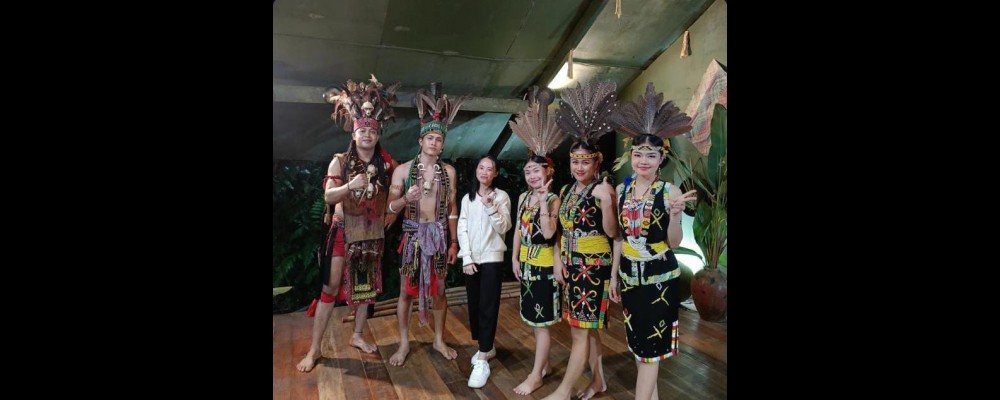
highlight of every visit is the traditional cultural performance held at
the end of the tour. Dancers dressed in authentic tribal attire perform
energetic and graceful routines accompanied by traditional music and bamboo
instruments. One of the most popular performances is the Magunatip bamboo
dance, in which dancers skillfully step between rapidly clapping bamboo
poles in perfect rhythm.
The
performances are more than entertainment; they are a form of cultural
storytelling that reflects the beliefs, celebrations, and historical
experiences of Sabah’s indigenous peoples. The combination of music, dance, and
oral tradition creates a powerful connection between visitors and the cultural
heritage of the region.
Preserving
Culture for Future Generations
Mari
Mari Cultural Village plays an important role in cultural preservation.
As modernization continues to transform rural communities across Borneo, many
traditional practices risk being forgotten. By employing local indigenous
people as guides, performers, craftsmen, and caretakers, the village provides
economic opportunities while ensuring that ancestral knowledge is passed down
to younger generations.
Every
visit contributes to the preservation of traditional architecture, language,
customs, and rituals that form an essential part of Sabah’s identity. In this
way, tourism becomes a meaningful partnership between visitors and local
communities, helping safeguard cultural heritage for the future.
Why
Visit Mari Mari Cultural Village?
Mari
Mari Cultural Village offers a rare opportunity to experience the living
heritage of Sabah in an immersive and authentic setting. Surrounded by
rainforest and guided by local storytellers, visitors gain a deeper
understanding of the people who have shaped Borneo’s history for centuries. The
combination of traditional houses, interactive demonstrations, indigenous
cuisine, and vibrant cultural performances makes it an unforgettable
destination for families, students, researchers, and travelers alike.
For
anyone seeking more than beaches and city attractions, Mari Mari Cultural
Village provides a meaningful journey into the heart of Borneo. It is a place
where history is not confined to books or museum displays, but continues to
live through real people, real traditions, and real stories that celebrate the
extraordinary cultural diversity of Sabah.
 " We’re truely dedicated to make your travel experience as much simple and fun as possible! "






Copyright © 2023 TYH Borneo Tours & Travel Sdn. Bhd. (0444330V) All Rights Reserved.
Web Design by O2O eCommerce